
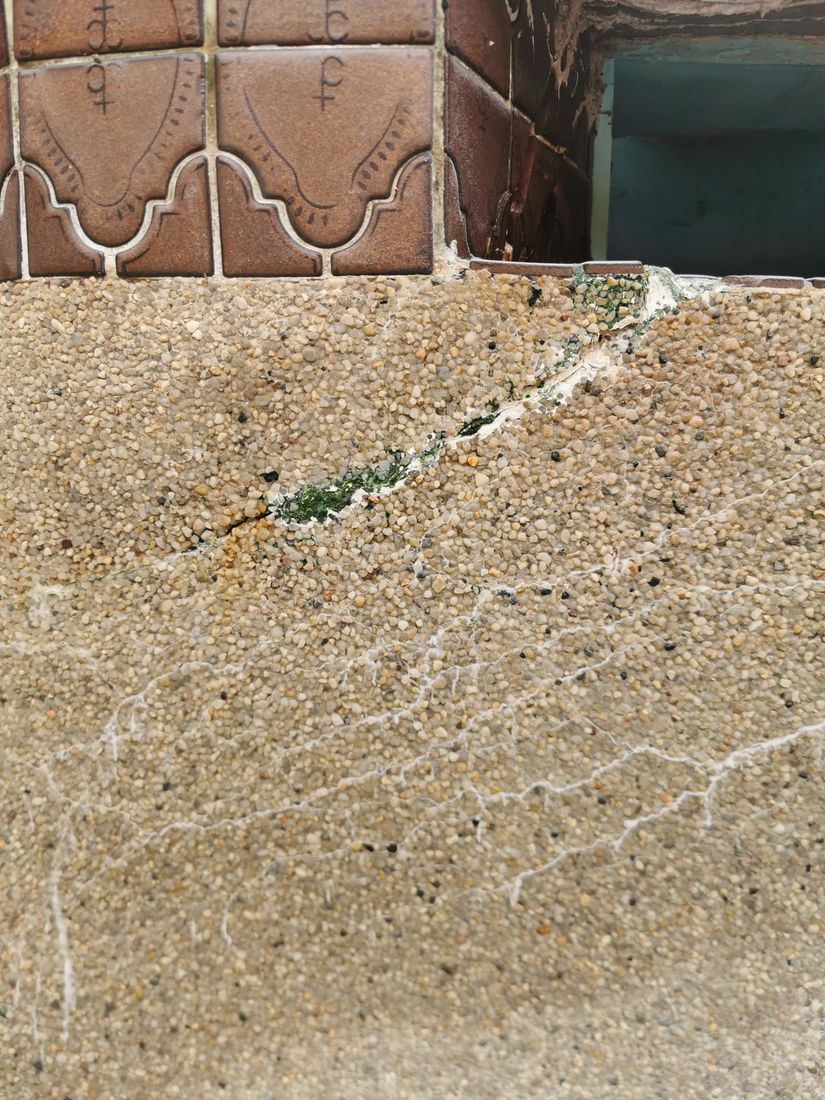
You spot a crack in the pebblecrete and your first thought is cost. Is this a patch job, or is the whole pool about to need resurfacing? The honest answer depends on where the crack is, how it's moving, and how old the surface already is.
Start with what kind of crack it is
Surface cracks sit in the cement finish only. They're thin, don't widen, and don't leak. Common on pools over ten years old, and usually cosmetic.
Structural cracks run through to the shell. They're often longer, wider, follow a straight line rather than a spider pattern, and get worse over time sometimes accompanied by water loss. These need the shell addressed before any surface work happens.
Settlement cracks show up when the ground under the pool shifts, common in Sydney on clay or reactive soil. They usually appear near the shallow end or steps and can reopen after a repair if the underlying movement isn't dealt with first.
If you're not sure which one you're looking at, get someone to check before spending money on either option. A crack that looks minor can be a symptom of something underneath, and a crack that looks dramatic can be nothing more than surface wear.
When a repair is enough
A patch repair makes sense when:
- The crack is isolated to one small area
- The rest of the pebblecrete surface is still in reasonable condition
- There's no active leak or shell movement
- The area being patched isn't highly visible (steps, shallow-end corners)
The process involves cutting the damaged section back to a clean edge, preparing the base, and rebuilding the surface with a matched pebble mix. Colour matching an old pool is never exact pebblecrete blends shift with age and sun exposure — so a repair on a visible wall can leave a patch that's noticeably different from the surrounding finish.
When it's time to resurface
Resurfacing the whole interior is the better call when:
- Cracking shows up in more than one area
- The surface is already rough, pitted, or delaminating elsewhere
- The pool is 15+ years old and the pebblecrete is due anyway
- A colour-matched patch would be visible and bother you every time you look at the pool
This is the point where a repair stops being the cheaper option. Fixing one crack on a surface that's about to need full resurfacing just means paying for the same section twice. If your pebblecrete is old enough to be cracking, it's worth asking whether the rest of the pool is close behind.
What resurfacing involves
The existing finish is stripped or acid-etched back to the shell. Structural cracks are repaired or the shell is reinforced first. Then a new interior goes on pebblecrete, quartzon, or a tiled finish, depending on what you're after. Read more about the full pool repair, restoration, and resurfacing process here. Most Sydney resurfacing jobs run a few days for straightforward surface work, longer if coping tiles, waterline tiles, or structural repairs are part of the scope.
If you're resurfacing anyway, it's also the point where a lot of homeowners reconsider the interior finish entirely, or upgrade coping and waterline tiles at the same time rather than doing it as a separate job later.
Getting it assessed properly
A crack is easy to see and hard to diagnose from a photo. The only reliable way to know whether you're looking at a repair or a resurface is a site inspection where we can check the shell, the surrounding surface condition, and whether there's any sign of ongoing movement.
Pebble Masters has been repairing and resurfacing pebblecrete pools across Sydney for over 25 years. If you've spotted a crack and aren't sure what it means, call 02 9725 2466 or get in touch to book an assessment.